
How to Start a Lawn Care and Gardening Business in Australia
A practical guide to starting a lawn care or gardening business in Australia, covering registration, equipment, pricing, route density, customers, safety, insurance and admin.
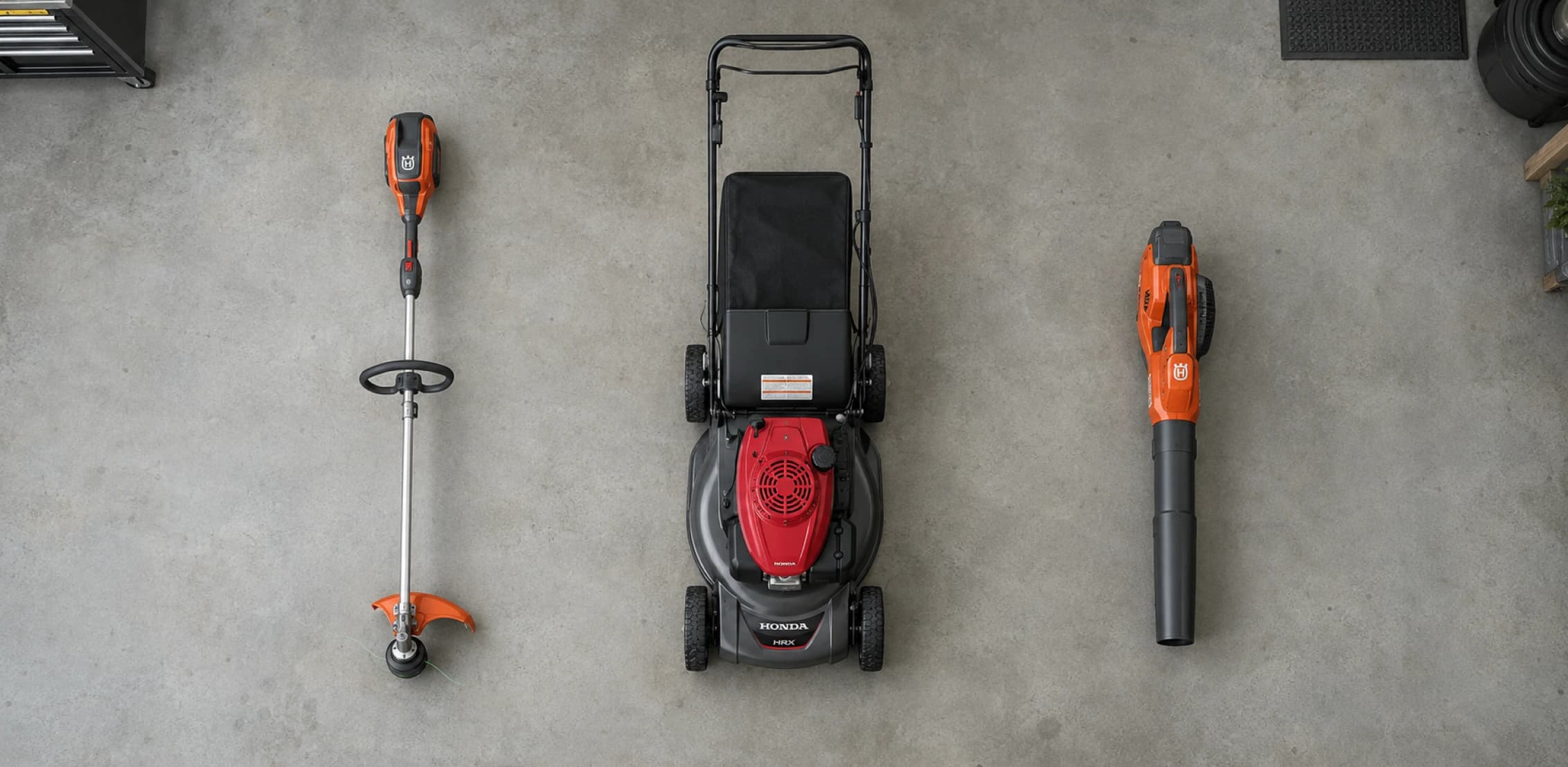
Starting a lawn care or gardening business in Australia isn't particularly complicated. A ute, a reliable mower and a handful of local customers can be enough to get moving.
The difficult part comes later: working out whether all that mowing, driving, quoting and equipment is actually making you money. Plenty of operators stay busy from morning to afternoon and still discover that too much of the day is being swallowed by travel, underpriced jobs, equipment costs and unpaid administration.
A better approach is to start simply, understand the numbers early and build the business around customers and work that make sense. You don't need the finished version of the business on day one. You need a workable starting point and enough discipline to improve it as you learn.
Starting Is Easy. Building a Profitable Round Is Harder
Before buying equipment or printing flyers, decide what sort of work you actually want to build around. A lawn care business can mean anything from a tight suburban mowing round to garden maintenance, hedging and clean-ups, or eventually larger acreage and commercial work.
You don't have to lock yourself into one model from the beginning. In fact, it's normal to try different jobs and discover what you're good at, what customers in your area want and which services are worth the time. But a rough direction matters because the business you're trying to build should influence the equipment you buy, the areas you service and the way you price.
If the goal is small suburban lawns, there's little reason to buy a large ride-on mower before you have work for it. If you're aiming at acreage or commercial properties, the vehicle, trailer and machinery requirements may look very different.
The same thinking applies to your service area. Don't assume your own suburb is automatically the best market simply because it's convenient. Nearby areas may have larger gardens, more recurring work or customers who are a better fit for the service you want to offer.
Spend some time looking at the type of properties in the area, the businesses already servicing them, the work those businesses advertise and how far you would need to travel between jobs. The Australian Government also recommends researching your market and planning the basics of the business before moving into registration and customer acquisition.
You don't need a 50-page business plan. A useful starting plan can be much simpler: where you want to work, what you want to do, what type of customer you want more of and what you need to earn from the time you're putting in.
Get the Basics Right Before the First Job
For somebody starting alone, operating as a sole trader is often the simplest structure. It's relatively inexpensive and straightforward to run, although you're personally responsible for the debts and liabilities of the business. The structure can be changed later if the business grows and a company becomes more appropriate.
Most genuine businesses will also want an Australian Business Number. An ABN is an 11-digit number used to identify the business to government, other businesses and the public, and applying directly through the Australian Business Register is free.
If you trade under a name other than your own personal name, you will generally need to register that business name with ASIC. As of July 2026, business name registration costs $47 for one year or $108 for three years.
Choose the name with some room to grow. A name such as Smith Lawn Mowing is clear if mowing is all you ever intend to do. If you later want to offer hedging, garden clean-ups, pruning and broader garden maintenance, a less restrictive name may age better. It's also worth checking the domain name and social media usernames before registering anything.
GST is another area that catches new operators. You don't automatically charge GST simply because you have started a business. For most Australian businesses, registration becomes compulsory when GST turnover reaches $75,000, while businesses below that threshold can generally choose whether to register voluntarily. If you aren't registered for GST, you shouldn't add GST to your invoices.
There's no single Australia-wide gardener licence that covers every service you might provide. Requirements can depend on your state, council and the work involved. Regulated herbicides, pesticides, certain tree work and other specialised services may bring additional rules. The Australian Business Licence and Information Service is a good place to check what applies in your location.
Insurance and safety belong in this early setup as well. You're using machinery on somebody else's property, and simple jobs can still go wrong. A stone can break a window, somebody can trip near your work, equipment can be stolen or a tool can be damaged. Public liability insurance is designed to respond to certain claims involving injury or property damage caused by negligence, while portable equipment cover can protect tools against events such as accidental damage, loss or theft depending on the policy.
Speak with an insurer or broker about the work you actually perform rather than assuming a personal vehicle or home insurance policy covers business activity. Requirements can also change if you start employing people.
The physical risks are just as real. Lawn care means working around spinning blades, line trimmers, flying debris, noise, heat, sun and repetitive physical work. Basic PPE may include hearing protection, eye protection, enclosed footwear, gloves where appropriate and sun protection. Safe Work Australia recommends managing hazardous noise at its source where possible and using suitable hearing protection where risks remain. It also recommends considering quieter machinery when buying equipment.
Heat deserves the same attention in an Australian outdoor business. Strenuous work may need to be moved to cooler parts of the day, with access to shade and cool drinking water. Keep a first aid kit in the vehicle and maintain your equipment properly. For a solo operator, an injury that stops you working can also stop the business earning.
Don't Spend Thousands Before You Have Customers
One of the easiest ways to make starting a lawn business unnecessarily expensive is to copy the setup of somebody who has already been operating for ten years. Established contractors may have zero-turn mowers, large trailers, commercial battery systems and a specialised tool for almost every job. What you're seeing is often the equipment they accumulated after the work justified it.
A straightforward residential setup can start with:
- a reliable mower
- line trimmer
- blower
- edging equipment
- basic gardening and hand tools
- suitable personal protective equipment
- fuel, batteries or chargers
- a practical way of transporting everything
The important word is reliable. Cheap domestic equipment can become expensive very quickly if it starts failing under daily commercial use.
At the other extreme, buying a $15,000 machine before you have enough work to keep it busy is difficult to justify. Before a large equipment purchase, ask a simple question: what will this allow the business to earn that it can't earn today?
If a ride-on mower lets you win profitable acreage or commercial work, there may be a clear business case. If it sits in the shed five days a week, there probably isn't. Hiring specialised machinery for occasional jobs can make more sense until the volume of work justifies ownership.
The petrol-versus-battery debate is similar. Commercial battery equipment has improved considerably and can be useful where noise, weight, maintenance and easy starting matter. Petrol equipment still has advantages for jobs where runtime, power or rapid refuelling are important. There's no need to choose a side permanently; choose equipment around the work you actually perform.
Noise can also become a commercial consideration. Quieter equipment may make you a better fit for retirement villages, schools, offices and tightly packed residential areas. Whatever equipment you use, maintain it. A breakdown doesn't only create a repair bill; it can derail an entire day's schedule.
The Numbers Matter More Than the Mower
This is where many new service businesses get into trouble. If you want to earn $50 an hour, charging customers $50 an hour doesn't mean the business is paying you $50 an hour.
"I want to earn $50 an hour, so I'll charge $50 an hour."
The customer isn't only paying for the minutes you're standing behind the mower. The price also has to cover:
- vehicle and fuel costs
- mower and tool servicing
- replacement equipment
- insurance and accounting
- software and advertising
- waste disposal and tip fees
- quoting and bookkeeping
- travel, loading and unloading
- rain delays and gaps in the schedule
- tax, your own wage and profit
The biggest trap is non-billable time. Imagine quoting a hedge that takes three hours to cut. The job itself may take three hours, but perhaps there's another 30 minutes driving there, 30 minutes travelling to the tip, 20 minutes loading and unloading, and an hour you already spent visiting the property to quote it. A three-hour job can easily consume five hours of the business's time.
The same issue appears across the year. On paper, a full-time year is around 2,000 hours, but rain, travel, quoting, equipment maintenance, administration, public holidays, sickness and gaps in the schedule reduce the hours you can actually sell. Your required hourly rate has to be based on realistic billable time, not simply the number of hours you're willing to work.
A Worked Example
Here's a simple example for a solo operator. The figures are illustrative, so swap in your own. For a deeper walk-through, see our guide to pricing a service job.
| Step | Example |
|---|---|
| Weeks worked a year, after holidays and sick days | 46 |
| Hours worked a week | 40 |
| Total hours worked | 1,840 |
| Paid hours left after travel, quoting, loading, admin and rain (about 60%) | 1,100 |
| What you want to pay yourself, before income tax | $60,000 |
| Running costs: vehicle, fuel, insurance, equipment, software, tip fees and accounting | $25,000 |
| What the business needs to earn | $85,000 |
| Hourly rate needed ($85,000 ÷ 1,100 hours) | About $77 plus GST |
So the operator who wants $60,000 a year needs to charge about $77 for every hour they're actually working, not $50. Every extra hour lost to travel or admin pushes that number up.
There's one more catch. $85,000 is above the $75,000 GST threshold, so this business would need to register for GST and add 10% on top, bringing the customer price to roughly $85 an hour. Work out where your own turnover is likely to land before you set your prices.
For predictable work, fixed pricing can reward efficiency. If experience tells you a hedge should take four hours and you quote the job accordingly, becoming faster six months later shouldn't necessarily mean earning less. That's one advantage of selling the result rather than just your time.
Recurring mowing is different because local competition usually creates a clearer market range. That makes route density especially important. Consider two contractors who each mow eight lawns at roughly the same price. One spends the day crossing four suburbs; the other has six customers within a few streets of one another. Their revenue might look similar. Their profit probably won't.
Driving from job to job is usually unpaid time. The tighter the route becomes, the more of the day can actually produce revenue. Early on, it's normal to accept work almost anywhere because you need customers. As the business fills up, location should become part of the decision. A $70 lawn two streets from three existing customers may be more valuable than an $80 lawn 25 minutes away.
Eventually, you aren't simply building a customer list. You're building a round.
Cash flow matters too, particularly if you start taking commercial contracts. A job can be profitable on paper while the bank account is still empty. Some organisations work on 30-day or longer payment cycles, which means you may already have paid for fuel, labour, equipment and materials before the money arrives. Ask about payment terms before accepting substantial commercial work and negotiate where possible.
For residential customers, make payment easy and invoice promptly. Don't finish a job on Monday and remember to create the invoice on Friday night. Send it while the work is fresh.
Put Money Aside for Tax
Nobody takes tax out of your pay when you're a sole trader. The tax on a year's profit is worked out when you lodge your return, which can mean a large bill arriving months after the money has been spent. A simple habit helps: move a set percentage of every payment into a separate account and don't touch it. An accountant can help you choose the right percentage.
Once your business income passes certain thresholds, the ATO will usually put you into PAYG instalments, which means paying tax quarterly in advance for the current year. The previous year's tax bill and your first instalments can land close together, so plan for both. You can also opt in voluntarily so the tax is spread out from the start.
Keep good records from day one. Business records generally need to be kept for five years, and if you plan to claim the business use of your vehicle, keep a logbook or other records of that use from the start. Super is easy to forget too. Sole traders aren't required to pay super for themselves, but if you don't, nobody else will.
Build a Customer Base Worth Keeping
The best customer isn't necessarily the person with the biggest house or the most expensive garden. Often it's the customer who books regularly, gives you easy access, communicates clearly, pays promptly, respects your time and values the work.
Those customers give the business stability. They also make scheduling easier because you know roughly where you will be working each week or fortnight. One-off garden clean-ups and overgrown properties can be profitable, but continually disrupting reliable recurring customers to squeeze in every large job that appears can weaken the core of the business.
Problem customers have a cost as well. Constant late payments, inaccessible properties, repeated last-minute changes, arguments over agreed work and unreasonable expectations all consume time that could be spent serving better customers. Sometimes losing a customer improves the business.
Finding the first customers doesn't require a huge marketing budget. Start locally. A Google Business Profile, a basic website, local Facebook and community groups, vehicle signage, letterbox flyers, referrals and before-and-after photographs can all help. Relationships with other local contractors can be useful too.
Before-and-after photos are particularly valuable for gardening work. If you clean up an overgrown property, reshape a neglected garden bed or transform an area with pruning and mulch, take photographs with the customer's permission. Over time, those images become a portfolio of real work rather than generic marketing.
Don't automatically treat every other gardener as a competitor. Established operators regularly receive work they can't fit in, don't have the right equipment for, consider too far away or simply no longer want because it's too small. If they know you're reliable, some of that work may come your way. As your own business grows, the referrals can work in both directions.
Recurring lawn customers can also become some of your best gardening customers. Once somebody trusts you with the property, they may eventually need hedging, pruning, weeding, mulching, garden clean-ups, planting or general maintenance. You don't need to jump from mowing lawns to major landscaping projects. Add services gradually as your skills improve.
Learn plant identification, understand how different plants respond to pruning and get better at hedging and general garden maintenance. The commercial advantage is simple: you can create more revenue from customers who are already inside your service area instead of continually adding more lawns farther away.
Learn From People Who Have Already Made the Mistakes
You will learn an enormous amount by doing the work yourself, but there's no reason every mistake has to be your own.
Australian lawn care and gardening Facebook groups can be a gold mine of practical information because many of the people answering questions are running the same type of business you're trying to build. One community worth exploring is the Lawn Care Contractors Australia Facebook group.
Don't only join and ask, "How much should I charge for this lawn?" Search the older discussions. Years of conversations can give you a much better picture of what running the business is actually like, including:
- pricing and quoting
- mowers, trailers and equipment reliability
- battery versus petrol equipment
- insurance and commercial contracts
- difficult customers
- route planning
- weed control and equipment repairs
- finding your first customers
The useful part isn't that every comment will be correct. It's that experienced operators often describe what went wrong, what cost them money and what they would do differently. Treat community advice as practical research, then verify anything involving tax, chemicals, licensing, safety or legal requirements through an official source.
Worth watching
If you're researching the industry before starting, the following video is a useful companion to the community discussions.
It covers lessons from decades of operating an Australian lawn care and gardening business, including market research, equipment, branding, networking and customer service.
Run It Like a Business From Day One
A verbal agreement can become surprisingly vague once a job is finished. You remember agreeing to mow, edge and remove the clippings; the customer remembers a discussion that somehow included weeding the garden, trimming a hedge and cleaning up the back corner. Written quotes reduce that ambiguity.
For larger jobs, put the scope, price, exclusions, waste removal, materials, payment terms, access requirements and the way additional work will be handled in writing. Recurring work can have simple expectations too: gates need to be unlocked, dogs secured and the lawn reasonably clear before you arrive.
Leave some breathing room in the schedule. Jobs run over, it rains, equipment breaks and traffic happens. If every available minute is booked, one bad morning can affect customers for the rest of the week.
Software can remove a large amount of repetitive administration. Customer details, quotes, recurring jobs, schedules, invoices, payments, expenses, job notes, route planning and customer communication can all be handled digitally. The point isn't to use technology for the sake of it; the point is to stop administration consuming the time you could be spending on paid work.
If you can finish a lawn and send the invoice before leaving the driveway, that's useful. If recurring jobs automatically appear in the schedule, that's useful. If you can see who hasn't paid without searching through a notebook, that's useful.
What software can't do is replace good service. Customers still notice whether you turn up when expected, communicate when plans change and do what you said you would do. Technology should make those things easier, not become a substitute for them.
The same principle applies to the entire business. Start with reliable basic equipment, register the business correctly, understand your costs and find a handful of customers. Then improve the things the numbers and the work tell you to improve.
Tighten the route. Improve the pricing. Replace equipment when the business can justify it. Add garden services as your skills develop. Keep the customers who make the business stronger and stop chasing the ones who don't.
Most importantly, pay attention to the difference between being busy and running a profitable business. That's what separates somebody who owns a mower and does a few jobs from somebody who has built a lawn care and gardening business capable of providing a reliable income for years.
Related articles

How to Get an ABN in Australia: Step-by-Step Guide
A practical guide to getting an Australian Business Number (ABN), covering what an ABN is, who needs one, what to prepare, and how to apply for free through the Australian Government.
How to Register a Business Name in Australia: A Guide for Tradies & Service Businesses
A practical guide to registering a business name in Australia, covering when you need one, how much it costs, checking availability and trade marks, and how to register through ASIC.
How to Price a Service Job Without Guessing
A practical guide for Australian service providers who want to price jobs with more confidence by accounting for labour, materials, travel, overhead, margin, GST, and risk.

How to Create an Invoice in Australia: Free Guide
A practical guide to creating invoices and tax invoices in Australia, covering the ATO requirements, GST, the seven details a tax invoice needs, and how to send one.
Why Service Providers Need a Website in 2026
Learn why a professional website matters for service providers in 2026, from local SEO and lead generation to brand awareness, credibility, and converting more enquiries.

