
How to Get an ABN in Australia: Step-by-Step Guide
A practical guide to getting an Australian Business Number (ABN), covering what an ABN is, who needs one, what to prepare, and how to apply for free through the Australian Government.
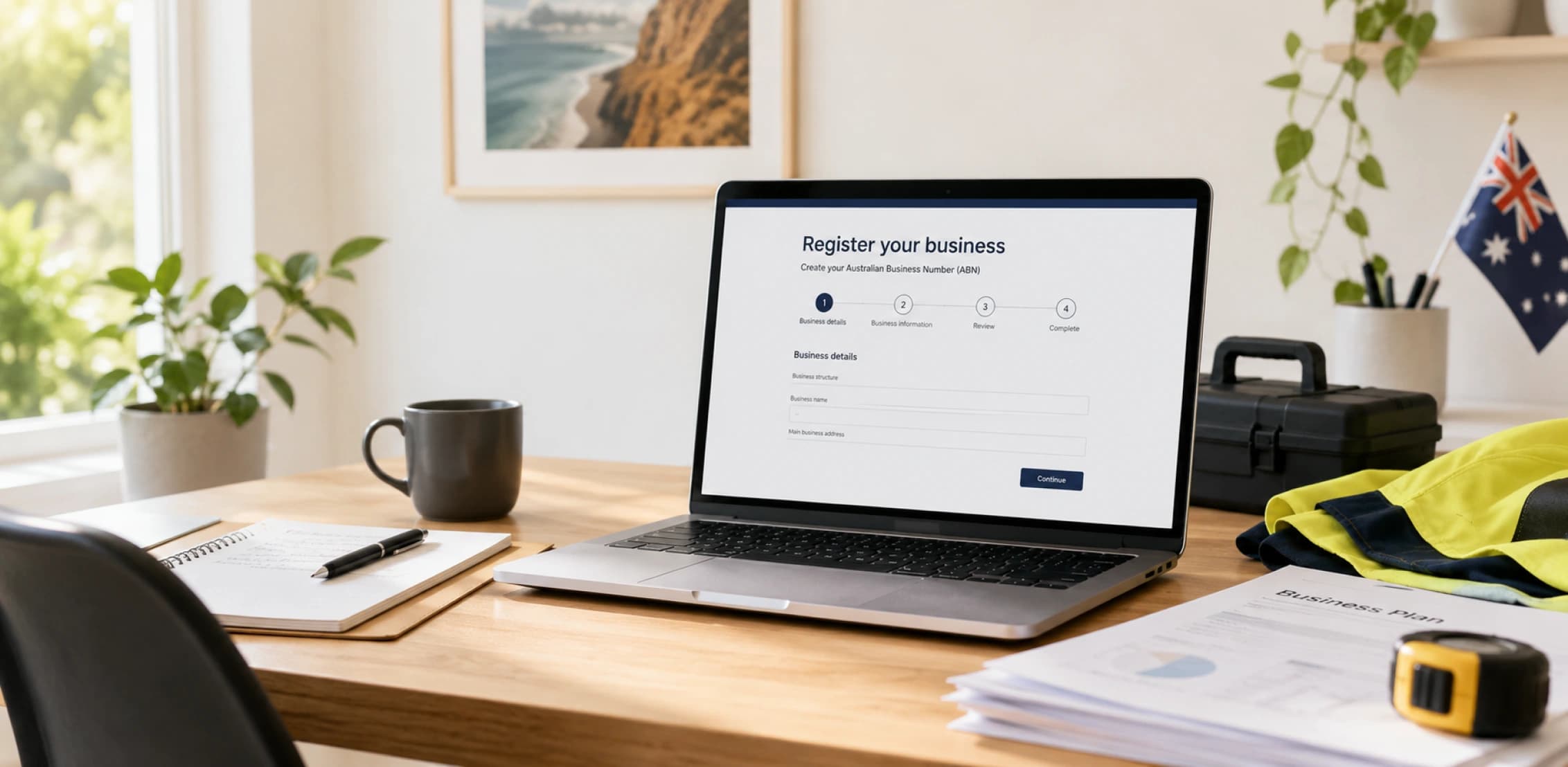
If you're starting your own trade or service business in Australia, getting an Australian Business Number (ABN) will often be one of your first steps. You'll come across your ABN when invoicing customers, registering a business name, dealing with other businesses and setting up other parts of your business.
Whether you're starting a lawn care business, going out on your own as a plumber, taking on cleaning jobs or setting yourself up as a handyman, the process is relatively straightforward. Applying directly through the Australian Government is free, and many successful applicants receive their ABN immediately after completing the online application.
This guide explains what an ABN is, whether you need one, what you'll need before applying, and how to apply step by step.
What is an ABN and why do you need one?
ABN stands for Australian Business Number. It's a unique 11-digit number used to identify your business or entity when dealing with the Australian Government, other businesses and the public.
An ABN might look something like this: 12 345 678 901. In simple terms, you can think of it as an identification number for your business.
You'll often hear people call it an "ABN number". Technically, the "N" in ABN already stands for "Number", but both terms are commonly used.
For a tradie or service business, your ABN will commonly appear when you're dealing with customers, suppliers and government services.
Having an ABN can allow you to:
- Identify your business on invoices and other documents.
- Confirm your business identity when dealing with other businesses.
- Register a business name.
- Register for GST if required.
- Apply for other business and tax registrations.
- Register eligible Australian domain names.
- Help customers and other businesses verify who they're dealing with.
For contractors and businesses supplying services to other businesses, quoting an ABN can also be important for getting paid. In circumstances where the no-ABN withholding rules apply, a payer may be required to withhold 47% of a payment if the supplier doesn't quote an ABN. There are exceptions, so this doesn't apply to every payment or every person doing occasional work.
Your ABN is also different from your Tax File Number (TFN). An ABN identifies your business or entity, while your TFN is used for your tax affairs. Getting an ABN doesn't replace your TFN.
Do you need an ABN?
Not everybody doing paid work automatically needs or qualifies for an ABN. You don't become entitled to one simply because you've completed a job or because somebody has asked you to get one.
According to the Australian Business Register (ABR), you're generally entitled to an ABN if you're carrying on or starting an enterprise in Australia, making supplies connected with Australia's indirect tax zone, or you're a Corporations Act company.
For someone genuinely starting their own trade or service business, there may be fairly clear signs that you're taking steps to start an enterprise. You don't necessarily need to already be earning money or have paying customers before applying.
For example, imagine you're starting your own lawn care business. You might already be:
- Buying mowers, tools or other equipment for the business.
- Advertising your lawn care services.
- Setting your own prices.
- Preparing or sending quotes to potential customers.
- Taking enquiries or bookings.
- Purchasing supplies.
- Arranging business insurance.
- Looking for customers.
The ABR specifically recognises activities such as buying equipment, obtaining insurance, issuing quotes and applying for finance as possible evidence that you're taking genuine steps to start an enterprise.
One important distinction for tradies is that simply having an ABN doesn't automatically make you an independent contractor. If a business tells you to get an ABN so it can pay you as a contractor, that doesn't necessarily mean you're legally operating as one.
The Australian Government warns that the difference between an employee and an independent contractor isn't determined simply by whether someone has an ABN or sends invoices. If you're unsure whether you're genuinely operating your own business or are actually working as an employee, check the government's employee and contractor guidance before applying.
What to know before applying for an ABN
Before completing your ABN application, you'll need to decide what structure your business will operate under. Your business structure affects how your business is legally operated and can also affect tax, liability, reporting requirements and your responsibilities as the owner.
Common Australian business structures include:
- Sole trader.
- Partnership.
- Company.
- Trust.
Many people starting a small one-person trade or service business choose to operate as a sole trader because it's a relatively simple structure, but that doesn't necessarily mean it's the right option for everyone.
The ABR requires you to decide on your business structure before completing your ABN application, so it's worth understanding the differences before you begin.
The exact information you'll need during the application depends on your structure and circumstances, but it's useful to have your important business details ready beforehand.
This can include:
- Your Tax File Number (TFN).
- Your business's legal name.
- Your proposed business start date.
- Details about your main business activity.
- Your business address and details of other business locations.
- Your postal address.
- Your email address and phone number.
- Details of partners, directors or trustees where applicable.
- An Australian Company Number (ACN) if you're applying for an existing company.
- Details of a tax or BAS agent if you're using one.
You'll also need to provide a date for when you require your ABN. The ABR states that this should generally correspond with when you expect to start business activities, which could include activities such as purchasing stock, buying equipment or otherwise taking genuine steps to begin the business.
When applying, your proposed ABN start date can't be more than six months into the future.
How to apply for an ABN
You can apply for an ABN online through the Australian Government. The application takes you through questions about your business, structure, activities and contact details.
The process can be broken down into these steps:
- Decide on your business structure. Determine whether you'll operate as a sole trader, partnership, company, trust or another type of entity. For many people starting a small service business on their own this may be a sole trader, but you should choose the structure appropriate to your circumstances.
- Check that you're entitled to an ABN. Make sure you're carrying on an enterprise or taking genuine steps to start one. The online application includes questions designed to help determine whether you're entitled to an ABN.
- Gather your information. Have your TFN, contact information, business details and any required partner, director, trustee or company information ready before you begin.
- Start the government application. You can apply through the Australian Business Register or the Australian Government Business Registration Service. The Business Registration Service can be useful when starting a new business because it allows you to apply for an ABN alongside certain other business registrations.
- Enter your main business activity. You'll be asked to describe the main type of work your business carries out. Choose the activity that most accurately reflects what your business actually does.
- Enter your business and contact details. Complete the requested information about you and your business, including relevant addresses and contact information. Check that names, addresses and other important details are correct.
- Submit your application. Once you've completed the questions, submit the application for assessment. If the application is successful and all required information is available, you may receive your ABN immediately after completing the online application.
For a trade or service business, your main business activity might be plumbing, electrical services, cleaning, gardening, lawn maintenance, landscaping, painting, pool servicing, building or another type of construction or maintenance service.
Try to choose the activity that best describes the main work your business actually performs rather than selecting a category simply because it sounds broader or more professional.
How much does an ABN cost and how long does it take?
Applying for an ABN directly through the Australian Government is free.
You may find private businesses online that offer to complete or submit an ABN registration on your behalf for a fee. Using one of these services isn't required if you're comfortable completing the government application yourself.
If you're applying yourself, make sure you're using an official Australian Government website rather than accidentally paying a private registration service for something you can do directly for free.
Many successful applications can be processed immediately. If you've supplied all the required information and your application is successful, you may receive your ABN when you finish the online application.
If the application can't be finalised immediately and needs further review, you'll generally receive a reference number instead. The Australian Government currently advises that these reviews can take up to 20 business days, and the ATO may contact you if additional information is required.
ABN vs business name, TFN and GST
When you're setting up your first business, terms such as ABN, business name, TFN and GST can easily become mixed together. They're related, but they each serve a different purpose.
| Item | What it means | Example |
|---|---|---|
| Legal name | The legal name of the person or entity operating the business. | Jack Williams |
| ABN | The 11-digit number used to identify the business or entity. | 12 345 678 901 |
| Business name | A registered name the business trades under. | Jack's Pool Care |
| TFN | A Tax File Number used for tax purposes. | Separate from the ABN |
| GST registration | A separate tax registration for businesses required or choosing to register for GST. | Registered or not registered |
For example, imagine Jack Williams starts a pool servicing business as a sole trader. His legal name is Jack Williams and he receives an ABN for his business activities.
If he simply trades using the name Jack Williams, he generally doesn't need to register a separate business name. If he wants customers to know the business as Jack's Pool Care, he generally needs to register that business name.
Australian Government guidance says you need to register a business name if you're trading under a name that's different from your own name. A business can also have more than one registered business name linked to the same ABN.
The Australian Government Business Registration Service allows you to apply for a business name while you're setting up your ABN, although registering a business name isn't free. If you're ready to choose and register a name, see our step-by-step guide to registering a business name in Australia.
GST registration is also separate from getting an ABN. Receiving an ABN doesn't automatically mean you're registered for Goods and Services Tax.
Your ABN identifies your business or entity, while GST is a tax registration. You need an ABN before you can register for GST, but whether you actually need to register for GST depends on your business and circumstances.
Your TFN is separate again. Sole traders continue to use their individual TFN for their tax affairs even though they may also have an ABN for their business.
Using your ABN once you have it
Once you receive your ABN, you'll use it throughout the day-to-day operation of your business.
For a tradie or service provider, one of the most common places you'll use your ABN is on invoices. If you're GST registered and issuing a tax invoice, your ABN is one of the details that must appear on it. For businesses that aren't GST registered, government guidance also recommends including your ABN on regular invoices.
You'll also commonly use your ABN when:
- Registering a business name.
- Dealing with suppliers.
- Providing business details to commercial customers.
- Completing government registrations.
- Setting up certain business services.
- Providing details to other businesses that need to verify your business.
ABNs are publicly searchable through the Australian Government's ABN Lookup service. The service is free and doesn't require someone to log in before searching.
Depending on the information associated with your registration, somebody searching for your business may be able to see:
- Whether your ABN is active.
- Your entity name.
- Registered business names.
- Your entity type.
- Your main business state or territory and postcode.
- Whether you're registered for GST.
This can be useful when you're working with other businesses, builders, property managers or commercial customers who want to confirm that the business details you've provided are legitimate.
Once you start quoting and invoicing customers regularly, using software to store your business details can also save you from entering the same information every time. In TREVY, for example, your business details and ABN can be used when creating quotes and invoices for your customers.
What to do after getting your ABN
Getting your ABN is an important milestone when starting a business, but it's only one part of getting everything ready to operate.
If you're planning to trade under a name other than your legal name, one of your next steps will usually be registering your business name. Our guide to registering a business name in Australia explains how the process works and what you'll need to do.
You'll also need a reliable way to bill customers once you start completing work. Our guide to creating an invoice in Australia explains the details Australian businesses should consider when preparing their invoices.
Other steps may include:
- Check whether you need to register for GST.
- Check the licences, registrations and permits required for your trade or industry.
- Consider setting up a separate business bank account.
- Arrange appropriate business insurance.
- Decide how you'll create and manage quotes for customers.
- Decide how you'll keep track of customers, enquiries and jobs.
- Set up a basic system for recording business income and expenses.
You don't necessarily need to build a complicated system from day one. The important thing is creating a basic foundation that lets you keep your customer information organised, respond to enquiries, send quotes, schedule work, invoice customers and keep track of what you've been paid.
From there, you can improve your processes as the business grows. For many tradies and service providers, that means gradually moving from notes, spreadsheets and separate apps into a system that keeps the customer journey together from the first enquiry through to the final invoice.
Related articles
How to Register a Business Name in Australia: A Guide for Tradies & Service Businesses
A practical guide to registering a business name in Australia, covering when you need one, how much it costs, checking availability and trade marks, and how to register through ASIC.

How to Create an Invoice in Australia: Free Guide
A practical guide to creating invoices and tax invoices in Australia, covering the ATO requirements, GST, the seven details a tax invoice needs, and how to send one.

